
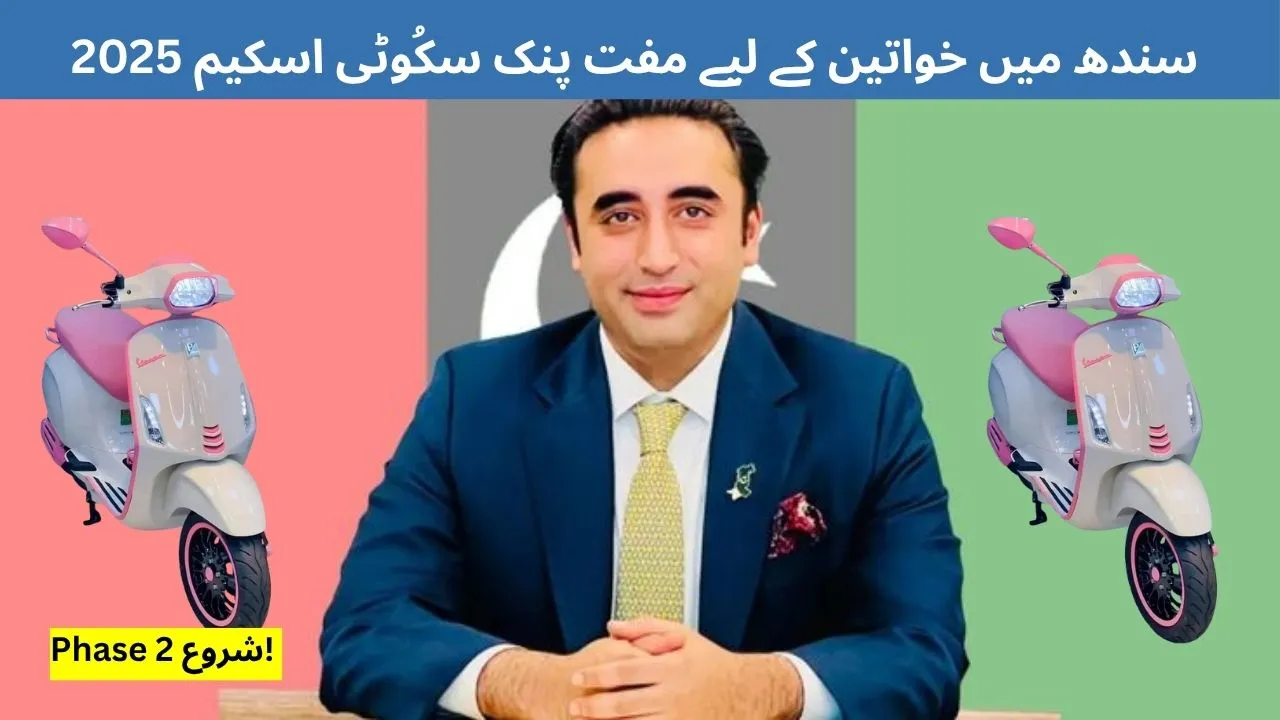

In a landmark move to strengthen women’s empowerment and promote environmentally sustainable transport, the Government of Sindh has expanded the Free Pink EV Scooty Scheme into 2026. Launched under the Transport and Mass Transit Department, the initiative is spearheaded by Senior Minister Sharjeel Inam Memon and implemented by the Sindh Mass Transit Authority (SMTA).
Originally introduced in April 2025, the scheme successfully completed Phase 1 in September 2025, followed by Phase 2 announced in November 2025. Entering 2026, the program has evolved into one of Pakistan’s most impactful women-centric electric mobility initiatives, with expanded coverage, improved infrastructure, and increased scooter allocation across Sindh.
The core objective remains unchanged: providing free electric pink scooters to women, particularly students, working professionals, and women from low-income or marginalized communities, enabling safe, independent, and eco-friendly mobility.
Vision and Objectives of the Pink EV Scooty Scheme
The Sindh Pink EV Scooty Scheme 2026 aligns with the province’s broader goals of gender equality, climate responsibility, and inclusive development.
Key objectives include:
Women’s Empowerment by providing independent and secure transportation
Improved access to education and employment opportunities
Reduction in transport-related harassment and safety risks
Promotion of zero-emission electric vehicles
Support for Sindh’s Green Transport and Climate Action policies
The scheme complements other women-focused transport initiatives such as the Pink Bus Service and Pink Taxi Program, forming a comprehensive mobility ecosystem exclusively designed for women.
What’s New in 2026?
For 2026, the Sindh Government has announced several enhancements:
Increase in total scooter distribution beyond the initial 1,000 target
Expansion to additional districts including interior Sindh
New EV charging stations planned for rural and semi-urban areas
Improved training modules for first-time riders
Stronger monitoring to prevent misuse or resale
These upgrades aim to ensure long-term sustainability, broader reach, and greater social impact.
Eligibility Criteria for Pink EV Scooty Scheme 2026
The eligibility framework remains inclusive yet targeted to ensure fair distribution:
Applicant must be a female permanent resident of Sindh
Valid domicile or PRC required
Students enrolled in recognized schools, colleges, or universities
Working women including teachers, nurses, healthcare staff, office employees
Valid motorbike or car driving license
Learner’s permit accepted with a 60-day grace period
Mandatory road safety and riding test after selection
Affidavit required confirming non-sale and non-commercial use for seven years
Special priority is given to low-income households, minorities, widows, and women from rural districts.
Documents Required
Applicants must upload the following documents during online registration:
CNIC (front and back)
Sindh domicile or PRC
Valid driving license or learner’s permit
Student ID or enrollment certificate (for students)
Employment letter or salary slip (for working women)
Recent passport-size photographs
Affidavit on stamp paper for non-commercial use
All applications are verified digitally through NADRA to ensure transparency.
Application Process – Step by Step (2026)
The application process remains 100% online and free of cost.
Visit the official SMTA website
Navigate to Projects → EV Scooty Ballot Form
Register using CNIC and personal details
Upload required documents
Submit the form and receive confirmation via SMS or email
Track application status online
For 2026, new application windows will be announced district-wise to ensure wider participation.
Selection and Distribution Process
The selection process is fully transparent and merit-based:
Applications verified through NADRA
Computerized balloting conducted under media supervision
Winners notified via SMS
Mandatory free riding and safety training
Skill assessment test
Scooty distribution with helmet, registration, and documents
Distribution ceremonies are being expanded beyond Karachi to Hyderabad, Sukkur, Larkana, Mirpurkhas, and other districts in 2026.
Benefits of the Pink EV Scooty Scheme
Each electric pink scooty is worth approximately PKR 150,000 to 180,000, fully subsidized by the Sindh Government.
Key benefits include:
No purchase cost or fuel expense
Low maintenance electric vehicle
Improved safety and independence
Reduced commuting time
Environment-friendly zero-emission transport
Access to free training, helmet, and registration
The pink branding also serves as a strong symbol of women’s visibility and empowerment in public spaces.
Impact So Far
By the end of 2025, hundreds of women benefited directly, including students, nurses, and teachers. In 2026, the government estimates that thousands of households will experience indirect economic benefits due to improved mobility and access to income opportunities.
Environmentally, the scheme contributes to reduced urban emissions and supports Sindh’s long-term EV transition strategy.
Challenges and Government Response
Key challenges include limited charging infrastructure, riding confidence among first-time users, and awareness gaps in rural areas.
To address these in 2026, the government is:
Installing new EV charging stations
Offering women-only training programs
Launching awareness campaigns via radio, social media, and local NGOs
Strictly warning against agents and scams
The SMTA has reiterated that applications are completely free and no agent is authorized to collect fees.
Future Outlook Beyond 2026
The Sindh Government plans to further scale the program by:
Increasing annual scooter quotas
Partnering with private EV manufacturers
Introducing subsidized EV purchase options
Integrating solar-powered charging stations
Linking the scheme with smart city mobility plans
This positions Sindh as a national leader in women-focused electric transport policy.
Conclusion
The Sindh Free Pink EV Scooty Scheme 2026 is more than a transport initiative—it is a transformative social program. By combining women’s empowerment, environmental responsibility, and transparent governance, the scheme is reshaping mobility for women across Sindh.
As the program expands in 2026, it continues to unlock opportunities, independence, and dignity for thousands of women—driving not just scooters, but real social change.