
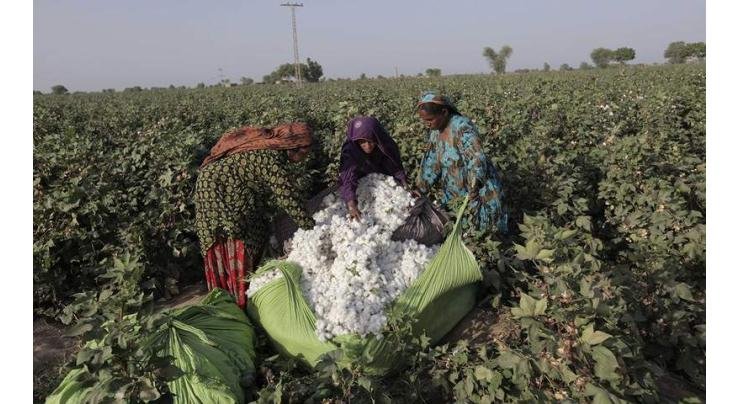


Hari Women Welfare Association (HWA), a non-profit organization working to protect farmers’ rights, has called for immediate implementation of the Sindh Women Agricultural Workers Act, 2019.
Hyderabad, March 27, 2026 – Hari Welfare Association (HWA), a non-profit organization working to protect the rights of farmers, has called for immediate implementation of the Sindh Women Agricultural Workers Act, 2019.
Speaking at a seminar in Mirpurkhas In the region on Friday, government officials and civil society representatives pointed to issues that continue to harm the female agricultural workforce.
Deputy Mayor of the city, Sumaira Baloch, said that the district government and local government bodies are implementing laws and rules aimed at protecting and empowering women.
She stressed the role of societies in supporting women’s rights and eliminating all types of discrimination based on gender.
Akram Ali Khaskheli, president of HWA, said an estimated 15 million women in rural Sindh lack basic rights, including health care. educationAnd fair wages.
He said that a large percentage of them work in agriculture, livestock raising and fishing, but they remain deprived of official recognition, social protection and fair compensation.
According to him, a total of 771 cases of violence and abuse against women and girls were recorded through media reports in Sindh in 2025, including 300 incidents of murder.
According to his joint statistics, women working in agriculture usually earn between Rs 500 and Rs 700 per day for their long work of more than 8 hours.
He added that their work includes picking cotton, harvesting chili peppers, date Industrialization, banana cultivation, and wheat cultivation.
He lamented that although the 2019 law was passed, implementation remained absent throughout the governorate, limiting access to rights such as equal pay, forming unions, written contracts, and social security.
Earlier this year, it was reported that the Sindh Cabinet had approved the rules under the 2019 Act, but they were not notified and published.
The peasant women, including Fauzia Laghari, Shahida Parveen, Jamila, Abida Lashari, and Azmana Baloch, shared their life and work experiences as well as the rights violations they claimed to face every day.
app/zmp/