

Author: Rana Afzaal
Publication Date: October 26, 2025
Updated: December 7, 2025
Introduction
The Benazir Income Support Program (BISP), Pakistan’s largest social safety net initiative, stands as a beacon of poverty alleviation and social protection. Launched in 2008 in memory of Shaheed Benazir Bhutto, the program currently supports over 10 million households, representing approximately 20% of the country’s population. As of December 2025, with inflation remaining high and economic challenges persistent, BISP’s role has become increasingly critical.
This year, the program has undergone transformative reforms, including increased quarterly stipends, the nationwide rollout of digital payment systems, and expanded skill development initiatives. Under the leadership of Chairperson Senator Rubina Khalid, BISP has secured a budget allocation of 716 billion rupees for 2025-26, a 100% increase from the previous year. This article explores the latest December updates, significance, challenges, and future prospects of BISP, drawing on insights from the International Monetary Fund (IMF), World Bank, and local reports.
Historical Background
BISP was established in 2008 under President Asif Ali Zardari to combat poverty, initially providing 3,000 rupees monthly to 5 million households, with funding reaching 90 billion rupees by 2016. By 2022, it covered 40% of households below the poverty line, earning recognition as a successful global model.
By 2025, the program has expanded to reach 10 million households, with over 80% of beneficiaries being women. Beyond cash assistance, it addresses education, health, and skill training, fostering human capital development and women’s empowerment across Pakistan.
2025 Latest Updates
In 2025, BISP has introduced several transformative changes to address immediate needs and long-term growth for impoverished families.
1. Stipend Increase: Benazir Kafaalat
Since January 2025, the quarterly stipend under Benazir Kafaalat has risen from 10,500 rupees to 13,500 rupees, a necessity driven by inflation. This increase benefits 10 million households, equating to 4,500 rupees monthly. Chairperson Rubina Khalid emphasized that this step enhances financial autonomy for poor women.
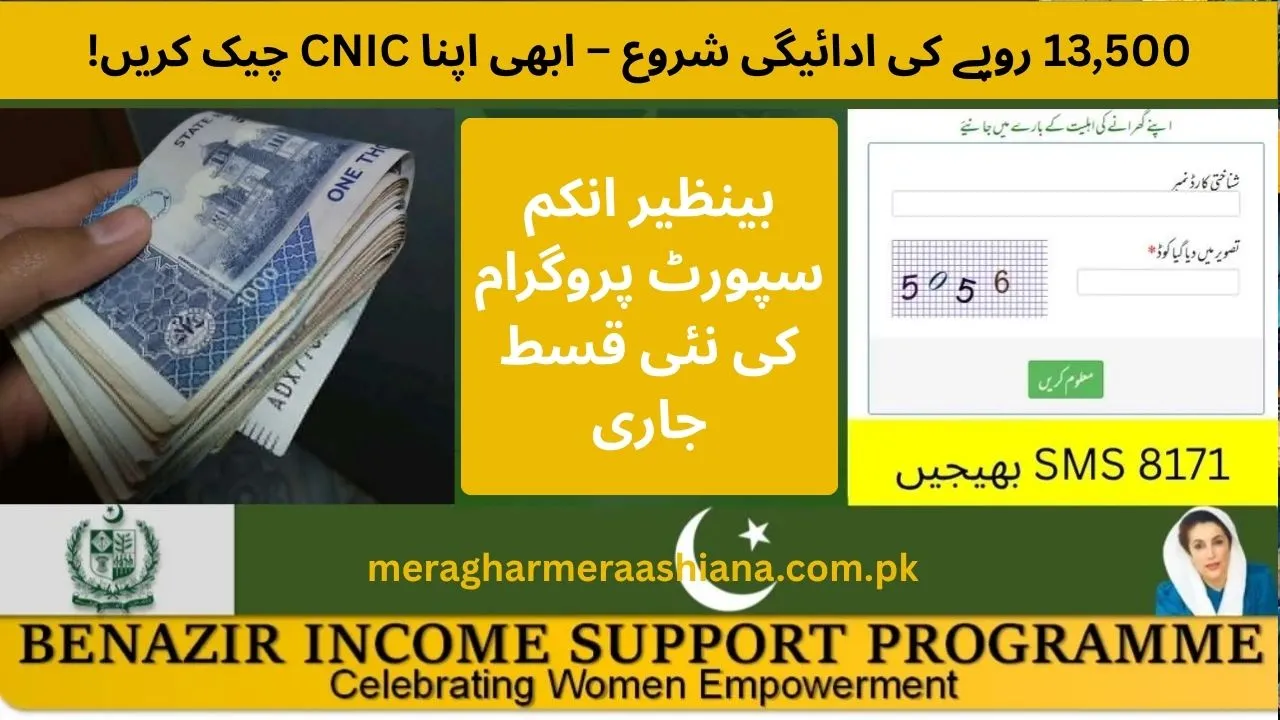
December 2025 Update: The fourth quarterly installment of 13,500 rupees began disbursement on December 25, 2025. Payments are being made phase-wise across all provinces through multiple channels including BISP payment camps, designated banks, mobile wallets, and ATMs to ensure transparency and avoid overcrowding at centers. Beneficiaries are advised to verify eligibility via SMS to 8171 or the official BISP portal before visiting payment sites.
2. Digital Wallet Revolution: Historic Nationwide Launch
Major Breakthrough – December 2025: On December 2, 2025, Prime Minister Muhammad Shehbaz Sharif officially launched the digital wallet system for all 10 million BISP beneficiaries in a historic ceremony held in Islamabad. This landmark initiative represents Pakistan’s largest digital financial inclusion project.
Key Features of the Digital Wallet System:
- 10 Million Digital Wallets: One crore (10 million) digital wallets have been created for all BISP beneficiaries, linked directly to their CNICs with biometric verification
- Free SIM Cards: The government is distributing 10 million free SIM cards in partnership with Jazz and Mobilink, starting with pilot cities including Hyderabad, Sukkur, and Rahim Yar Khan
- Direct Transfers: Payments are deposited directly into beneficiaries’ mobile wallets (JazzCash, EasyPaisa) or linked bank accounts, eliminating middlemen and preventing corruption
- Multiple Withdrawal Options: Beneficiaries can withdraw funds through ATMs, authorized retail agents, partner banks, or mobile wallet apps
- Enhanced Security: Biometric verification and CNIC matching ensure only rightful beneficiaries receive payments
- Financial Inclusion: The system provides poor women access to modern financial services, enabling them to make bill payments, transfers, and mobile top-ups
December Expansion: The digital wallet system became fully operational in December 2025, with beneficiaries now able to receive their 13,500 rupee installments directly through digital channels. This eliminates long queues at payment centers and empowers women with financial independence.
Prime Minister Shehbaz Sharif described the initiative as embodying “the spirit of Shaheed Mohtarma Benazir Bhutto” and called it a “great leap towards a cashless economy.” He noted that 78% of the Ramadan relief package was successfully distributed digitally, demonstrating the effectiveness of digital payment systems.
3. Benazir Hunar Mand Program
Launched by President Zardari in 2025, the Benazir Hunar Mand Program offers skill training to youth. In partnership with the Karachi Chamber of Commerce and Industry (KCCI), it aims to train 100,000 young individuals, creating employment opportunities and breaking the cycle of poverty through skills development.
4. Benazir Nashonuma and Education Enhancement
The Benazir Nashonuma Program has benefited 3.6 million women, reducing stunting in children by 6.4%. Benazir Education Stipends now offer additional incentives for girls, with 70% attendance mandated.
December Update: The Benazir Taleemi Wazaif Program has released double stipends for children who maintained regular school attendance and met the 70% attendance requirement. This covers previous months’ pending dues and provides additional support for educational expenses. The special education grant for flood-affected districts (Sindh and Balochistan) continues to cover over 250,000 schoolchildren.
5. Registration and Verification Facilities
Dynamic Registration Centers and mobile vans are expanding access to rural areas. The 8171 SMS service remains available for CNIC verification and payment status checks.
December Notice: BISP has completed its nationwide re-survey campaign to update National Socio-Economic Registry (NSER) data. The December 2025 payment cycle includes enhanced verification processes to ensure only genuinely deserving families receive assistance. Beneficiaries can verify their status through:
- SMS to 8171 with their CNIC number
- Official BISP web portal at 8171.bisp.gov.pk
- Mobile wallet apps (JazzCash/EasyPaisa)
- BISP Tehsil Offices
- Helpline: 0800-26477
6. Special December 2025 Initiatives
Digital Wallet Bonus: A limited number of families with active BISP accounts, verified CNICs, and clean records are receiving a special 50,000 rupee wallet bonus under an economic support scheme aimed at strengthening financial resilience.
Enhanced Payment Methods: December 2025 payments are available through:
- Digital wallets with instant credit
- Bank accounts with biometric verification
- ATM withdrawals using BISP cards
- Authorized retail outlets across Pakistan
- Traditional BISP payment camps (for those without digital access)
Updated Program Summary (December 2025)
| Update | Details | Beneficiaries |
|---|---|---|
| Kafaalat Stipend | 13,500 rupees quarterly (Fourth installment started December 25, 2025) | 10 million households |
| Digital Wallet System | Nationwide launch by PM Shehbaz Sharif (December 2, 2025) with 10 million wallets | All BISP beneficiaries |
| Free SIM Distribution | 10 million free SIMs being distributed (Jazz/Mobilink partnership) | All registered women |
| Digital Payment Methods | Mobile wallets, bank accounts, ATMs, retail agents | Urban and rural beneficiaries |
| Wallet Bonus | Special 50,000 rupee economic support | Limited eligible families |
| Hunar Mand Program | Skill training initiatives | 100,000 youth |
| Nashonuma | 6.4% stunting reduction + nutrition support | 3.6 million women & children |
| Taleemi Wazaif | Double stipends released (December) for regular attendees | 250k+ children |
| 8171 Verification | Enhanced CNIC verification and payment tracking | All registered families |
Significance and Impacts
BISP has reduced poverty from 40% to 30%, significantly empowering women across Pakistan. The World Bank notes its role as a lifeline during crises like COVID-19 and the 2022 floods. In December 2025, the program continues to mitigate inflation’s impact by supporting access to food, education, and healthcare for poor families.
Digital Revolution Impact: The December 2025 digital wallet launch represents a historic shift toward financial inclusion. By providing 10 million women with digital financial tools, BISP is:
- Empowering women with financial independence
- Eliminating corruption and middleman exploitation
- Reducing payment delays and overcrowding
- Integrating poor families into Pakistan’s digital economy
- Supporting the government’s cashless economy vision
Prime Minister Shehbaz Sharif has linked BISP assistance with education and health conditions, urging beneficiary families to ensure children attend school and access health services to maximize the program’s long-term impact.
Challenges and Criticism
Despite significant progress, BISP faces ongoing challenges:
- Verification Accuracy: Identifying ineligible beneficiaries and preventing fraud remains a concern
- Digital Literacy: Many rural women lack experience with mobile wallets and digital systems
- Infrastructure Gaps: Limited internet connectivity and banking services in remote areas
- Temporary Relief: Critics argue the program offers short-term assistance rather than permanent poverty solutions
- Implementation Speed: PM Sharif has urged reducing the implementation cycle from 8-10 months to four months
However, the 2025 reforms, particularly digitalization and enhanced monitoring, directly address these issues. The government has formed high-level committees to ensure transparency, easy access, and fraud prevention through biometric verification.
Future Prospects
For 2025-26, BISP must prioritize:
- Full Digital Integration: Completing the rollout of digital wallets and free SIMs to all 10 million beneficiaries
- Expansion Target: Reaching 12 million households as infrastructure improves
- Skills Development: Scaling up the Hunar Mand Program to break the cycle of intergenerational poverty
- Conditional Cash Transfers: Linking assistance more firmly to education and health outcomes as emphasized by PM Sharif
- Rural Connectivity: Improving digital infrastructure in remote areas to ensure inclusive access
- Financial Literacy: Training beneficiaries to use digital tools effectively
Under IMF conditions and World Bank support, BISP will remain a key poverty alleviation tool. The government’s commitment to transparency in registration and payment systems will be crucial to achieving the target of 12 million households.
Conclusion
As of December 2025, BISP continues to serve as the cornerstone of Pakistan’s social protection system, offering hope and tangible support to 10 million families. The historic December 2 launch of the digital wallet system by Prime Minister Shehbaz Sharif marks a watershed moment in the program’s evolution, transforming it from a traditional cash transfer scheme into a modern digital financial inclusion platform.
The release of the fourth quarterly installment starting December 25, the nationwide rollout of 10 million digital wallets, the distribution of free SIM cards, and the continued expansion of skill development and nutrition programs highlight BISP’s ongoing effort to modernize and reach every deserving citizen. The integration of mobile wallets, bank accounts, and biometric verification ensures secure, transparent, and efficient delivery of assistance.
BISP represents more than just financial aid—it is a pathway to women’s empowerment, digital inclusion, and a stronger, self-reliant Pakistan. With sustained oversight, continued technological innovation, and public awareness, the program is poised to achieve even greater impact in reducing poverty and transforming lives across the nation.
For more details:
- Visit: bisp.gov.pk
- SMS: Send CNIC to 8171
- Web Portal: 8171.bisp.gov.pk
- Helpline: 0800-26477
- Mobile Wallets: JazzCash, EasyPaisa
This article has been updated with the latest information available as of December 7, 2025, including the historic digital wallet launch and fourth quarterly payment distribution.