Author: Rana Afzaal
Published: October 26, 2025
Introduction
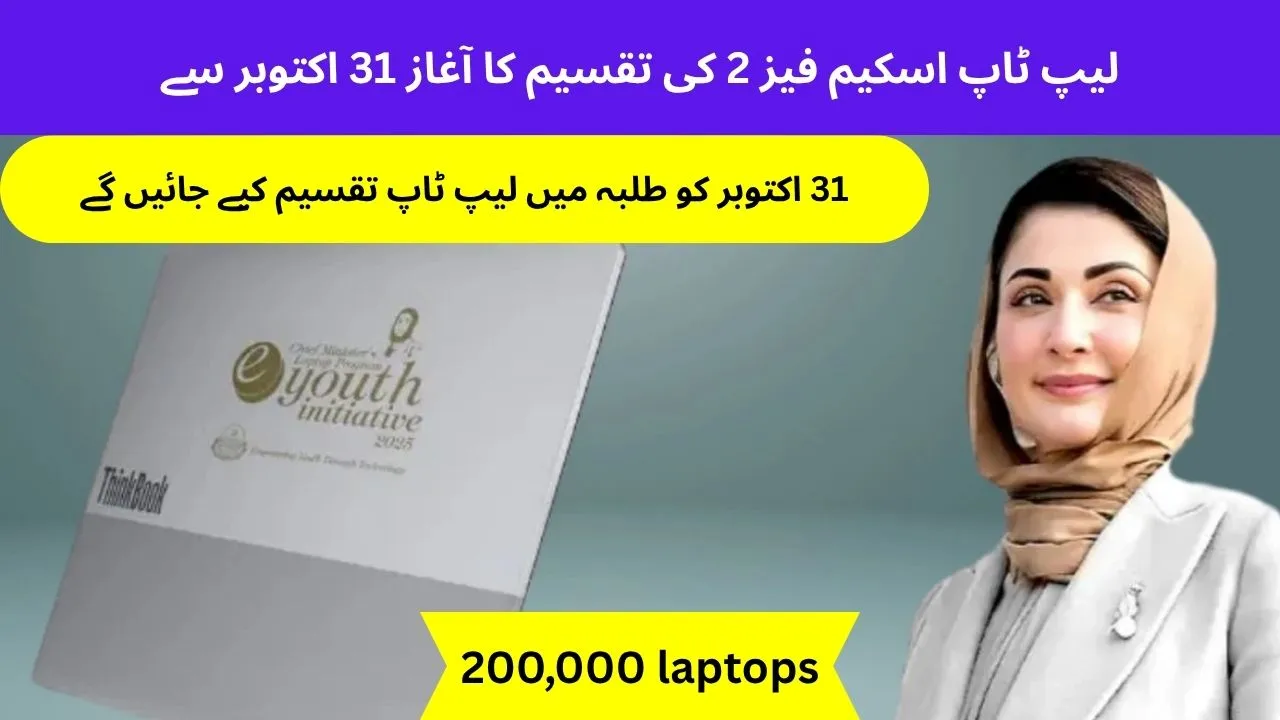
The CM Punjab Laptop Scheme Phase II stands as a cornerstone initiative by the Punjab government, aimed at equipping students with cutting-edge technology. Launched to distribute 110,000 to 200,000 high-performance laptops, this program targets eligible students from public sector universities, colleges, medical and dental institutes, and technical institutions. The application window closed in March 2025, and the highly anticipated distribution phase is set to commence on October 31, 2025. These laptops, featuring Core i7 processors, 8GB RAM, 512GB SSD, Windows 11 Pro, and pre-installed Microsoft Office 2021, are designed to enhance digital learning across the province.
This comprehensive guide, spanning over 2,600 words, provides an in-depth analysis of the scheme’s historical background, eligibility criteria, registration process, detailed distribution schedule starting October 31, 2025, its educational and economic impacts, potential challenges, and future outlook. The information is sourced from the Higher Education Department (HED) Punjab, official portals like cmlaptophed.punjab.gov.pk, and reputable sources such as Nation.com.pk and YPPakistan.org.pk, reflecting updates as of October 26, 2025. This initiative not only fosters digital education but also positions Punjab as a leader in technological advancement and economic growth.
Historical Background: Evolution of the Scheme
The CM Punjab Laptop Scheme traces its origins to 2018 with the launch of Phase I under former Chief Minister Muhammad Shahbaz Sharif, which distributed 20,000 laptops. This initiative marked a significant step toward bridging the digital divide, boosting internet usage by 40% and promoting online education among high-achieving students with 70% or above marks. The COVID-19 lockdown in 2022 further underscored its importance, highlighting the urgent need for digital devices amid remote learning challenges.
Phase II was announced in 2024 by Chief Minister Maryam Nawaz and implemented in 2025, backed by a budget exceeding PKR 10 billion. Aligned with the International Monetary Fund’s (IMF) human capital development goals, this phase expands the scope to include 110,000 to 200,000 laptops for students pursuing BS, MS, intermediate, and technical courses. With a focus on Punjab’s 60% rural population—where internet access remains limited to 30%—the scheme aims to enhance digital inclusion and educational equity.
Eligibility Criteria: Who Qualifies?
The CM Punjab Laptop Scheme Phase II is merit-based, ensuring transparency and fairness in selection. Eligible students must meet the following criteria:
- Institution Type: Only students enrolled in public sector institutions, including universities (e.g., University of Punjab), colleges, medical/dental colleges, and TEVTA/technical institutes, qualify.
- Merit Requirements:
- Intermediate/FA/FSc: 60-70% marks.
- BS (1st/2nd semester): 2.5 CGPA or 70% marks.
- MS/MPhil: 3.0 CGPA.
- Technical courses: 60% marks.
- Domicile: Exclusive to Punjab residents with a valid Punjab domicile.
- Reserved Quotas:
- Women: 30% quota to promote female education.
- Persons with disabilities: 5% quota.
- Rural areas (especially South Punjab): 40% quota.
- Previous Phase I beneficiaries are ineligible.
- Age and Course Limits: Students aged 18-25 pursuing BS/MS or those who enrolled in intermediate in 2025.
These criteria, set by the HED Punjab, utilize a lottery system alongside merit lists to ensure a transparent selection process. Out of over 500,000 applicants, approximately 110,000 students have been shortlisted, with plans to potentially expand to 200,000 pending additional funding.
Registration Process: Past and Present
The registration process was conducted online via the official portal cmlaptophed.punjab.gov.pk from January 1 to March 18, 2025. Applicants were required to upload their CNIC, institutional details, recent mark sheets, and domicile certificate, with SMS alerts and email notifications facilitating communication with selected candidates.
As the registration window has closed, selected students are now being notified through their institutions’ notice boards or SMS. Those who applied are advised to contact their Head of Department (HOD) or college/university administration to confirm their status. Future phases, such as Phase III anticipated in 2026, may introduce new registration cycles focusing on AI and cloud computing technologies.
Distribution Starting October 31, 2025: Detailed Plan
The distribution of laptops under the CM Punjab Laptop Scheme Phase II begins on October 31, 2025, and will continue through December 15, 2025. This phase will feature formal ceremonies hosted by educational institutions, with Chief Minister Maryam Nawaz or her representatives in attendance to underscore the scheme’s significance.
Distribution Process
- Notification: Selected students will receive SMS or email notifications by October 25, 2025, detailing the distribution date, time, and venue.
- Biometric Verification: Prior to distribution, students must undergo biometric verification at NADRA e-Sahulat Centers or their institutions, requiring a CNIC, student ID, and thumb impression. This process typically takes 15-30 minutes.
- Distribution Venues: Major events will occur in Lahore and Rawalpindi, with college/university halls or designated government centers in other districts. Mobile vans will serve rural areas to ensure accessibility.
- Laptop Specifications:
- Processor: 13th Gen Intel Core i7.
- RAM: 8GB DDR4 (upgradable).
- Storage: 512GB SSD.
- Operating System: Windows 11 Pro.
- Software: Pre-installed Microsoft Office 2021.
- Additional: 1-year warranty and TCO certification.
Distribution Schedule
- Phase 1 (October 31 – November 15): Lahore, Rawalpindi, Faisalabad, Gujrat – 50,000 laptops.
- Phase 2 (November 16 – November 30): Multan, Bahawalpur, D.G. Khan, Sahiwal – 40,000 laptops.
- Phase 3 (December 1 – December 15): South Punjab (Rahim Yar Khan, Layyah) – 20,000 laptops.
The total cost, exceeding PKR 10 billion, is funded through the provincial budget, with procurement from international vendors like Dell and HP ensuring quality. The flagship event on October 31 in Lahore’s Convention Center and Rawalpindi’s Liaquat National University will distribute over 10,000 laptops, featuring CM Maryam Nawaz’s address and success stories from students.
Impacts: Educational, Economic, and Social
The CM Punjab Laptop Scheme Phase II promises transformative impacts across multiple domains.
Educational Impacts
- Online Learning: Expected to increase online education access by 50%, addressing post-COVID needs.
- Academic Performance: Access to platforms like Coursera and HEC Digital Library could improve CGPA by 15-20%.
- Research Opportunities: Advanced software (e.g., MATLAB, SPSS) will enhance research capabilities.
Economic Impacts
- Freelancing and IT Jobs: A 20% rise in freelancing is projected, with students earning up to PKR 50,000 monthly. Punjab’s IT exports may reach USD 2 billion in 2025.
- GDP Contribution: The World Bank estimates a 1% boost to Punjab’s GDP through digital inclusion.
Social Impacts
- Gender Equality: The 30% quota for women could increase female education by 30%, particularly in rural areas.
- Rural Development: The 40% rural quota will empower students economically.
Statistical Insights
- Phase I saw 40% of students complete online courses.
- 20% became freelancers with an average income of PKR 50,000 monthly.
- Female participation rose by 35%.
Challenges and Solutions
Despite its potential, the scheme faces hurdles:
- Rural Connectivity: Only 25% of rural areas have internet access. Solution: Deployment of Wi-Fi hotspots and mobile data packages.
- Delays: 20% of cases faced delays in 2025. Solution: Enhanced coordination with NADRA and stricter timelines.
- Corruption Risks: Potential for fraudulent registrations. Solution: Mandatory biometric verification and HED oversight.
Future Outlook: Phase III and Beyond
Following the success of the October 31, 2025, distribution, Phase III is slated for 2026, introducing AI and cloud computing technologies with a target of 500,000 devices. This expansion aims to position Punjab as a “Digital Province,” potentially increasing IT exports by 50% and targeting USD 5 billion annually.
Conclusion and Recommendations
The CM Punjab Laptop Scheme Phase II, commencing distribution on October 31, 2025, marks a new era of educational and digital empowerment for 110,000 to 200,000 students. This initiative promises to enhance learning, economic independence, and gender equality, positioning Punjab as a competitive player on the global stage.
Recommendations:
- Students should prepare their CNIC and student ID in advance.
- Rural students should contact local HED offices for internet support.
- Complete verification by October 30 to avoid delays.
References: Higher Education Department Punjab, cmlaptophed.punjab.gov.pk, Nation.com.pk, YPPakistan.org.pk (as of October 26, 2025).