Author: Rana Afzaal
Introduction
Agriculture remains the backbone of Pakistan’s economy, and Punjab continues to play a central role as the country’s most fertile and productive province. Millions of farmers across Punjab depend heavily on tube wells for irrigation. However, rising electricity tariffs, increasing diesel prices, fuel supply uncertainty, and frequent power outages have significantly increased irrigation costs in recent years.
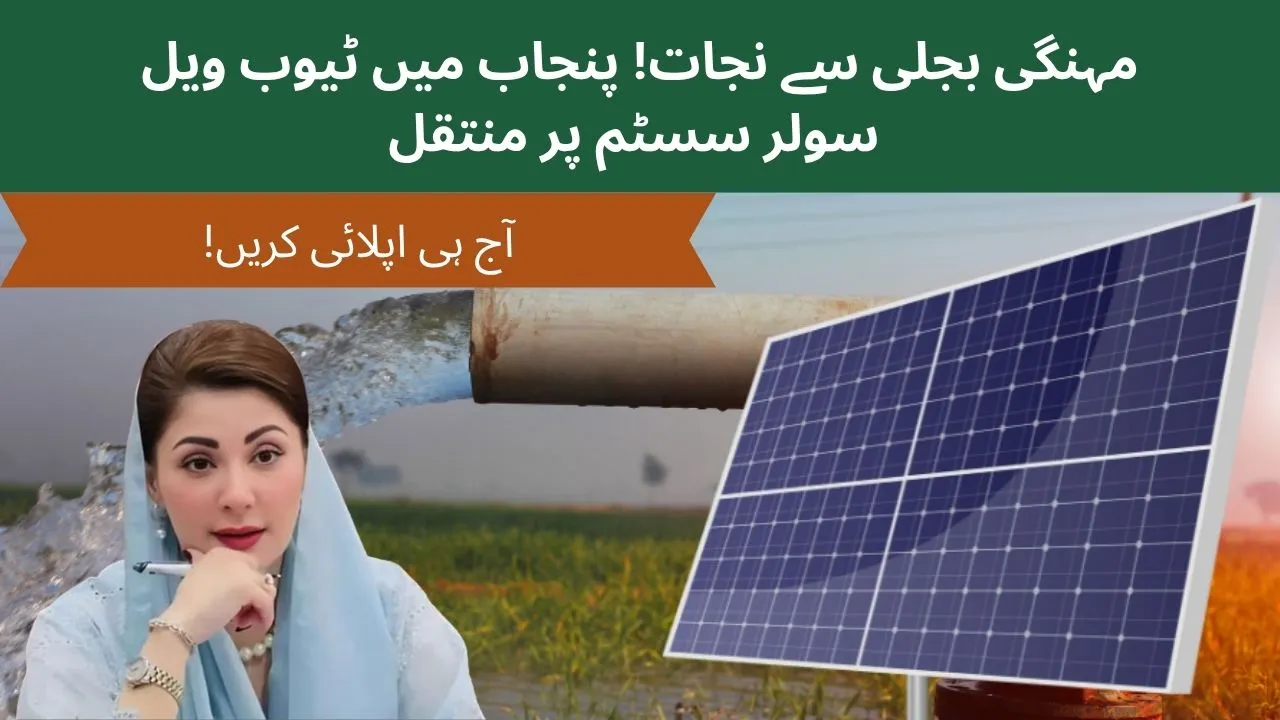
To counter these challenges, the Government of Punjab launched the CM Punjab Solarization of Tube Wells Program, a landmark initiative aimed at converting conventional diesel and electric tube wells into solar-powered systems. By 2026, this program has entered an advanced implementation phase, emerging as a flagship model for sustainable agriculture, renewable energy adoption, and farmer relief.
Background and Rationale
For decades, Punjab’s irrigation system has relied on diesel engines and grid electricity. Both energy sources have proven costly and unreliable. Escalating fuel prices, inconsistent electricity supply, voltage fluctuations, and load shedding have directly affected crop productivity and farm profitability.
Meanwhile, global advancements in solar technology have significantly reduced the cost of photovoltaic panels while improving efficiency and lifespan. Solar-powered tube wells now offer a reliable, low-maintenance, and environmentally friendly alternative. Recognizing this shift, the Punjab government designed a large-scale transition strategy to solar irrigation, aligning agricultural sustainability with energy independence.
Vision and Objectives of the Program
The CM Punjab Solarization of Tube Wells Program is more than an energy conversion project; it is a long-term agricultural reform initiative.
Its key objectives include:
- Reducing irrigation costs by replacing diesel and grid electricity with solar energy
- Ensuring uninterrupted water supply for crops
- Promoting clean, renewable, and climate-friendly energy
- Increasing farm productivity and income stability
- Supporting Pakistan’s climate commitments and renewable energy targets
- Modernizing rural infrastructure through green technology
By 2026, the program has become a cornerstone of Punjab’s climate-smart agriculture policy.
Financial Model and Subsidy Structure (2026 Update)
The Punjab government has allocated billions of rupees to support solar tube well conversion. After successful pilot phases, the program has expanded in 2026 with improved vendor management, monitoring systems, and farmer onboarding.
The subsidy structure remains farmer-friendly:
- 10 kW solar system: Rs. 500,000 subsidy
- 15 kW solar system: Rs. 750,000 subsidy
- 20 kW solar system: Rs. 1,000,000 subsidy
Farmers contribute the remaining cost, ensuring shared ownership and long-term responsibility. This co-financing model has proven effective in reducing misuse and improving system maintenance.
In the expanded 2026 phase, over 8,000 tube wells are targeted for solarization, with future phases planned based on groundwater sustainability assessments.
Eligibility Criteria for Farmers
To ensure transparency and fair distribution, eligibility criteria have been strictly defined:
- Applicant must be a permanent resident of Punjab
- Ownership of agricultural land with Fard-e-Malkiat
- Only one tube well per family is allowed
- Electric tube wells must have three-phase connections installed before the notified cut-off date
- No outstanding electricity or utility dues
- Groundwater depth must be within operational limits (generally up to 60 feet)
Eligible farmers can apply through the official provincial digital portal by submitting verified documents.
Application and Selection Process
The application process is fully online and transparent. Farmers submit:
- CNIC
- Land ownership documents
- Tube well and electricity connection details
- Recent electricity bills
Applications are verified digitally, followed by a computerized balloting system to ensure fairness. Selected applicants undergo site surveys, technical feasibility checks, and system installation through government-approved vendors.
Implementation and Monitoring Mechanism
By 2026, implementation has become more structured and data-driven. Each installed system is:
- Digitally registered
- Geo-tagged
- Monitored for performance and output
Farmers receive hands-on training in system maintenance, panel cleaning, and efficient energy usage. Technical support teams and district-level service centers ensure timely troubleshooting and long-term sustainability.
Key Benefits of Solar Tube Wells
Cost Reduction: Elimination of fuel and electricity expenses significantly increases farm profitability.
Reliable Irrigation: Solar-powered pumping ensures uninterrupted water supply during daylight hours.
Environmental Protection: Reduced carbon emissions support Pakistan’s renewable energy goals.
Rural Modernization: Clean energy adoption introduces new skills and green employment opportunities.
National Economic Impact: Lower fuel imports and reduced power demand ease pressure on national resources.
Challenges and Ongoing Concerns
Despite its success, the program faces critical challenges:
- Groundwater over-extraction due to zero energy cost
- Administrative coordination delays in some districts
- Maintenance and spare parts access in remote areas
- Sustainability of subsidies amid fiscal constraints
- Equitable access for small farmers and women landowners
These issues are being addressed through policy refinements in 2026.
Integrating Solarization with Water Management
Experts emphasize that solar irrigation must be paired with water conservation. The government plans to:
- Introduce smart monitoring and water-use tracking
- Promote drip and sprinkler irrigation systems
- Launch groundwater recharge and awareness campaigns
This integrated approach ensures environmental balance alongside agricultural growth.
Training, Capacity Building, and Green Jobs
In collaboration with agricultural universities and renewable energy firms, the Punjab government is expanding:
- Farmer training workshops
- District-level technical service centers
- Solar technician certification programs
These efforts are generating thousands of green jobs while ensuring system sustainability.
Long-Term Impact and Global Significance
The CM Punjab Solarization of Tube Wells Program aligns with the UN Sustainable Development Goals, particularly:
- SDG 7: Affordable and Clean Energy
- SDG 13: Climate Action
By 2026, Punjab has positioned itself as a regional leader in climate-smart agriculture, offering a scalable model for other provinces and developing countries.
Policy Recommendations
- Establish a Provincial Water Regulation Authority
- Link solarization with mandatory water-efficient irrigation systems
- Provide microcredit options for small farmers
- Create maintenance insurance or revolving repair funds
- Maintain a public transparency dashboard for monitoring progress
Conclusion
The CM Punjab Solarization of Tube Wells Program 2026 represents a historic transformation in Pakistan’s agriculture and energy landscape. By empowering farmers with renewable energy, reducing operational costs, and promoting environmental responsibility, the initiative demonstrates that economic growth and sustainability can advance together.
With continued policy discipline, monitoring, and community engagement, this program has the potential to reshape Punjab’s agricultural future and serve as a global example of sustainable rural development.