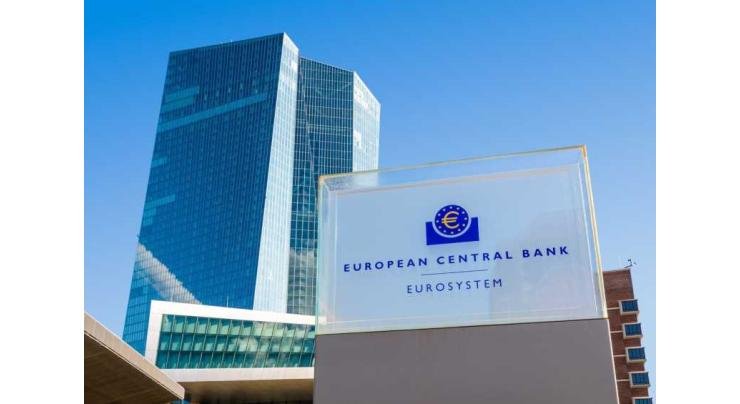

Brussels (UrduPoint / Pakistan Point News / WAM – March 19, 2026 AD) European Center Bank The European Central Bank (ECB) has urged EU banks to strengthen their preparedness for geopolitical shocks, calling on them to conduct internal stress tests to assess the impact of trade conflicts and tensions on their capital positions and to take precautionary measures to mitigate potential risks.
Claudia Buch, Chair of the European Central Bank’s Supervisory Authority blackboardEuropean said ParliamentThe Economic and Monetary Affairs Committee of the Economic and Monetary Affairs Committee called on banks to identify geopolitical risk events that could reduce their common equity tier 1 (CET1) capital by at least 300 basis points and outline the precautionary measures they will take to limit the impact.
She noted that eurozone banks are entering a phase of “increasing geopolitical uncertainty,” while maintaining strong capital levels. She pointed out that large institutions have a total proportion of common Tier 1 capital of about 16 percent, while the proportion of common Tier 1 capital is about 16 percent. Share Non-performing loans remained stable at around 2 percent. However, Buch warned that weaknesses remain in areas including commercial real estate and lending to small and medium-sized enterprises.
Buch explained that this step represents a reversal from EU-wide stress test for 2025, which assessed a combined contraction scenario linked to geopolitical frictions and protectionist measures. Buch said the new approach would give supervisors better insight into how individual lenders assess their exposure to geopolitical threats.
The ECB also signaled concern that banks may come under pressure to weaken lending standards as competition intensifies lend Losses remain relatively contained.
Buch said supervisors will closely examine underwriting standards to assess whether lending conditions still match the underlying risks.
Although there is no clear evidence of widespread deterioration, she noted that the available data is still incomplete, making it difficult for banks to measure themselves against the global economy. market.
Alongside the tougher stance on risks, Buch said the ECB is streamlining parts of its supervisory work to focus more on physical threats to resilience.
It stated that additional supervisory reports are collected each year as part of the individual reports Bank Ratings have been reduced by about 20 percent. The ECB is also standardizing processes including capital decisions, internal model approvals, fit and proper assessments and on-site inspections, with the aim of speeding up lower-risk cases while devoting more attention to complex and potentially systemic issues.
Buch said banks’ strong profitability gave them a window to invest in IT, digitalization and operational resilience at a time when the sector was facing frequent cyberattacks, increasing use of artificial intelligence and increasing reliance on critical outsourced services.
It also reiterated that full implementation Basel Third, it must remain a political priority and renew calls for a deepening Europe market Integration, a common deposit protection system and stronger liquidity support for banks in accuracy.
For now, the ECB’s main message has been that flexibility cannot be taken for granted. This has resulted in stronger capital and stable asset quality euro The region’s banks are considered a buffer zone, but supervisors are increasingly focusing on the risks that may arise maybe They only appear after geopolitical and economic pressures seep into the financial system.