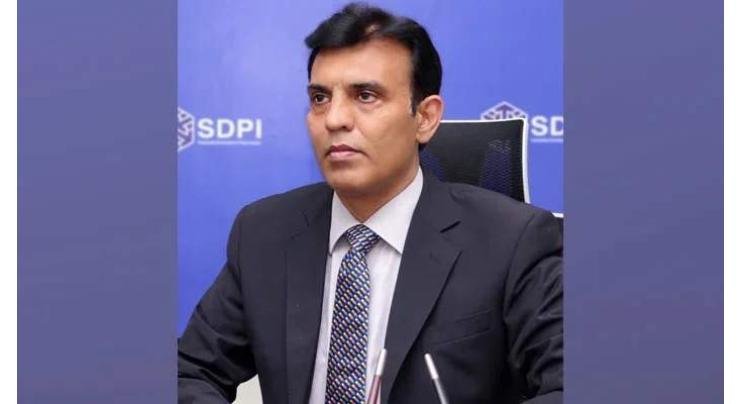

Executive Director of the Sustainable Development Policy Institute, Dr. Abid Qayyum Suleri, has warned that escalating tensions in the Middle East and disruption of global energy supplies could lead to serious economic consequences around the world.
Islamabad (Urdu Point / Pakistan Point News – 16 March 2026) Executive Director of the Sustainable Development Policy Institute, Dr. Abid Qayyum Suleri, has warned that the escalating tensions in… middle East and disruptions in global energy supplies could lead to serious economic consequences around the world.
At a press conference, Dr. Soleri said the global economy remains heavily dependent on fossil fuels, especially petroleum products, which continue to power industrial production, transportation and electricity generation through internal combustion engines. He noted that energy typically represents approximately one-quarter to one-third of the total cost in mechanical production systems.
He warned that any major disruption to energy supply chains could lead to a sharp increase in production costs and accelerate inflation globally. He said: “If energy supplies are disrupted to the extent that transportation and basic services are affected, the risk may exceed inflation and move towards hyperinflation, which could disrupt the global economy.”
Dr. Soleri said high oil Prices Its uncertain supply due to war remains a major concern for the world, especially developing economies.
He noted that the geopolitical conflict in the Gulf region has already shaken investor confidence and disrupted key economic sectors, including aviation, energy supplies and foreign investment.
He said that international companies and financial institutions have begun evacuating their employees or reducing their operations in parts of the region amid growing security concerns.
He said that even if the war stopped immediately, the economic impact would not disappear overnight. “The consequences of supply chain disruptions, energy uncertainty, and investor panic will continue to impact global markets for some time,” he noted.
He also noted that any economic slowdown in the Middle East could consequently affect foreign exchange inflows to Pakistan and overall economic stability.
However, Dr. Soleri said diplomatic efforts by regional and global powers could help prevent further escalation. He pointed this out Pakistan It is actively engaged in diplomatic contacts with countries in the region to promote de-escalation, while major powers such as China and Russia have also expressed their opposition to the widening conflict.
Describing the situation as an “evolving story,” Dr. Soleri stressed that the course of the conflict and the stability of energy markets will ultimately determine whether the world faces a temporary slowdown or a deeper economic crisis.